Updated April 2026
Running Amazon ads without the right keywords is like throwing darts in the dark—your chances of hitting a sale are slim. The right keywords ensure your products are shown to buyers actively searching for what you sell. But for beginners, figuring out which keywords to target, how to structure campaigns, and understanding the nuances of match types can feel overwhelming.
In this guide, we’ll break it down step by step, give practical examples, and show you how Seller Labs Ad Genius can simplify the process, helping you identify high-converting keywords and optimize your campaigns in 2025.
Quick Summary: What You’ll Learn
- How to identify keywords that actually convert.
- Why buyer intent matters and how to prioritize it.
- How broad, phrase, and exact match types work for beginners.
- Tips for testing and refining your keyword strategy.
- How Ad Genius simplifies keyword research and campaign automation.
Step 1: Start With Your Product and Audience
Before even opening a keyword tool, think about your product and your ideal customer. Ask:
- Who is most likely to buy this?
- What problem does my product solve?
- How would a customer search for it?
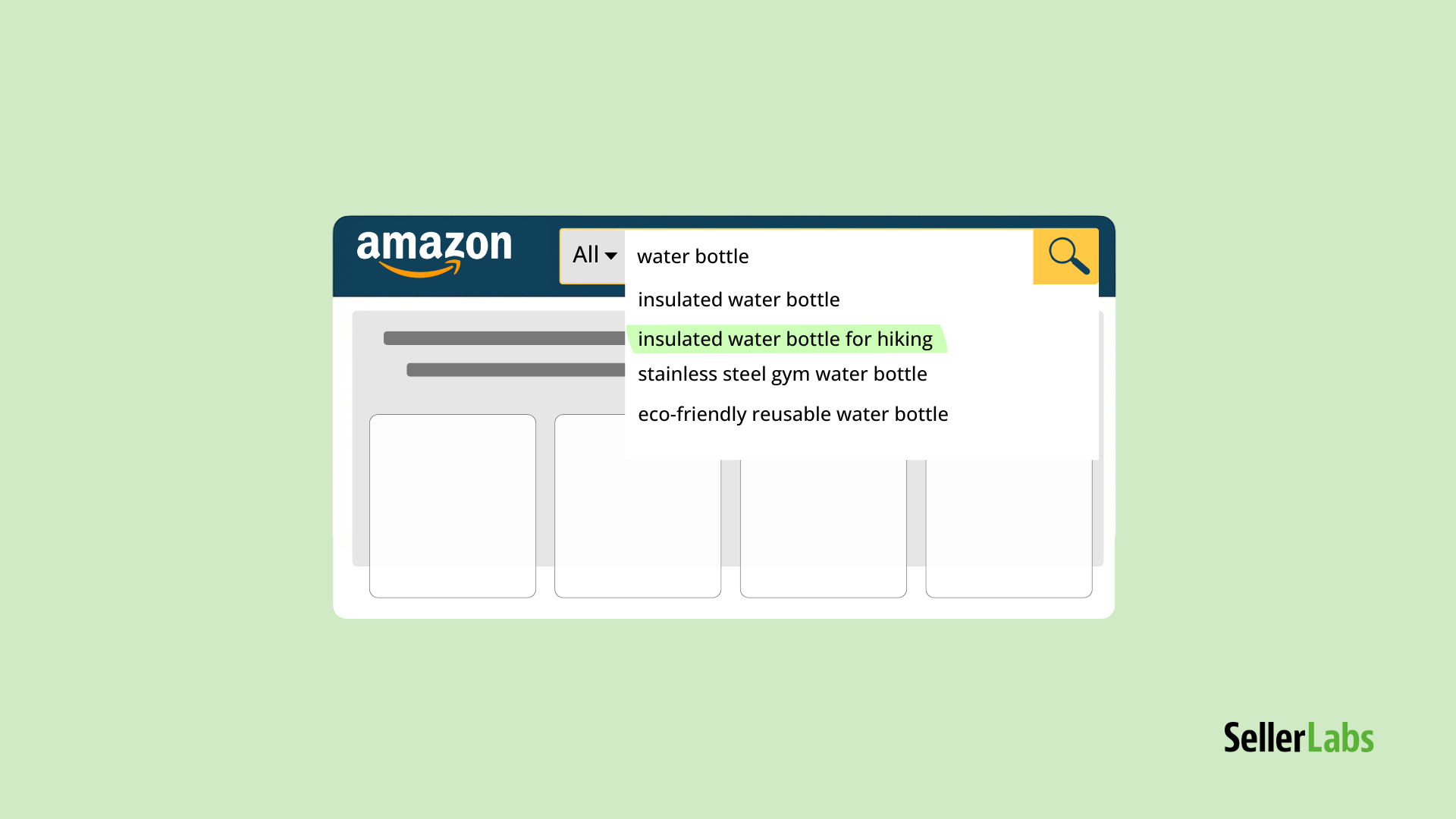
Example: If you sell a reusable insulated water bottle, your audience might be hikers, gym-goers, or eco-conscious buyers. They might search for:
- “insulated water bottle for hiking”
- “eco-friendly reusable water bottle”
- “stainless steel gym water bottle”
Tip: Brainstorm at least 10–15 phrases customers might use. This forms the foundation of your keyword list.
Step 2: Use Keyword Research Tools
Once you’ve brainstormed an initial list of potential keywords, the next step is to validate them. Effective keyword research tools can help you understand:
- Search volume estimates (how often buyers search for a term).
- Competition metrics (how many sellers are bidding on this keyword).
- Suggested variations (new opportunities you might not have thought of).
Example: “stainless water bottle” might show additional suggestions like:
- “insulated stainless steel bottle”
- “double wall water bottle”
- “vacuum sealed water bottle for hiking”
While Seller Labs doesn’t provide keyword research tools, Ad Genius supports the next step by helping you organize and optimize the keywords you decide to target once they’re in your campaigns.
Step 3: Organize Keywords by Buyer Intent
Not all keywords are equal—some signal readiness to buy, while others indicate early research.
| Buyer Intent | What It Means | Example Keyword |
|---|---|---|
| High | Ready to purchase | “insulated stainless steel water bottle for hiking” |
| Medium | Comparing or exploring | “stainless steel water bottle” |
| Low | Informational or general | “how to stay hydrated” |
Focus your ad spend on high-intent keywords first, while testing medium- and low-intent terms to discover new opportunities.
Step 4: Prioritize Keywords Using Match Types
Beginners often get confused by broad, phrase, and exact match types, but they’re essential to controlling who sees your ads and how efficiently you spend. For a full deep dive, check our guide Amazon PPC Match Types Explained: Broad vs Phrase vs Exact.
Here’s a beginner-friendly overview:
| Match Type | How It Works | Example | Best Use |
|---|---|---|---|
| Broad | Ad shows if any word in your keyword appears in the search | “stainless water bottle” → search: “best stainless bottle for kids” | Discovery, testing new keywords |
| Phrase | Ad shows if the exact phrase appears, with additional words before/after | “stainless water bottle” → search: “buy stainless water bottle for hiking” | Relevant searches with modifiers |
| Exact | Ad shows only if search matches exactly | “stainless water bottle” | High-converting, precise searches |
Step 4 in action: Combine buyer intent with match types to structure campaigns efficiently:
| Buyer Intent | Match Type | Example | Bid Strategy |
|---|---|---|---|
| High | Exact | “insulated stainless steel water bottle” | Highest bid, core keywords |
| High | Phrase | “stainless water bottle for hiking” | Medium bid, expand reach |
| Medium | Broad | “eco-friendly water bottle” | Lower bid, testing phase |
| Low | Broad | “how to stay hydrated” | Minimal spend, awareness/testing |
Tip for beginners: Start broad to discover what works, then refine to phrase and exact match to target buyers ready to purchase.
Step 5: Track Performance and Refine
Keyword research is never truly done. Monitor your campaigns regularly:
- Which keywords drive clicks and sales?
- Which have high spend but low conversions?
- Are there emerging trends in search terms you could capitalize on?
Seller Labs Ad Genius helps simplify this process by providing keyword and bid recommendations, making it easier for sellers to improve ROI and optimize campaigns without feeling overwhelmed.
Bonus Tips for Beginners
- Avoid Overbidding on Low-Intent Keywords: They can drive clicks but rarely convert to sales. Starting point: For new campaigns, consider setting your initial bid at around 70–80% of Amazon’s suggested bid. This gives your ads a chance to get impressions without overspending, and you can adjust bids based on actual performance.
- Use Negative Keywords: Prevent your ad from showing for irrelevant searches. For example, if you sell premium insulated bottles, add terms like “cheap” or “plastic” as negatives to avoid wasting ad spend.
- Test and Iterate: Start small, run campaigns for a week or two, and analyze performance. Scale up what works, pause what doesn’t.
- Tie Keywords to Listings: Make sure your product title, bullets, and description naturally include your top keywords to boost both ad relevance and organic ranking.
- Leverage Ad Genius Recommendations: Seller Labs’ Ad Genius can suggest bid adjustments, highlight underperforming keywords, and guide optimizations so beginners have more confidence in managing their campaigns.
By following these steps and using Seller Labs Ad Genius, beginners can confidently find the right keywords, optimize ad spend, and drive meaningful sales growth on Amazon in 2025.
Ready to master Amazon PPC keywords — and cut your workload in half?
Optimize campaigns smarter and faster with Seller Labs Ad Genius.
For a limited time, Get 30% off your first month — after your 30-day free trial.
Related Blogs
- Amazon Buyer-Seller Messaging Suspension: How to Address & Prevent It
Learn what triggers messaging suspensions and how to protect your account. - Amazon SEO: How to Optimize Your Product Listings for Higher Rankings & Sales
Boost visibility and organic traffic with updated Amazon SEO strategies. - How to Maximize Your Amazon Ad ROI with Data-Driven Strategies
Use analytics to refine campaigns, lower ACOS, and improve profitability. - 10 Amazon FBA Mistakes to Avoid in 2025
Save time, money, and headaches by steering clear of common seller missteps. - Amazon A10 Algorithm 2025: What Sellers Need to Know
Stay ahead by learning how the latest Amazon ranking algorithm impacts your listings. - Find high-converting search terms in Ad Genius