🚚 Key Takeaways
- UPS rebranded SurePost to Ground Saver on April 2, 2025 as part of its new ground portfolio.
- Declared value protection dropped from $100 to $20, meaning added cost for higher-value shipments.
- No more USPS handoff — UPS now handles the entire delivery process.
- Restrictions apply: no PO Boxes, military addresses, or shipments outside the 48 contiguous U.S. states.
- New surcharges and rate tables effective June 2, 2025 increased costs for many shippers — particularly for non-standard or longer-distance packages.
- Early reports from shippers show rates may have increased around 8–10%, depending on weight, zone, and contract terms.
From “SurePost” to “Ground Saver” — What Sellers Need to Know
In early 2025, UPS rebranded SurePost® as UPS Ground Saver®, marking a major update to its domestic economy service. While the rebrand may look cosmetic at first glance, it introduced meaningful changes to pricing, coverage, and service structure.
UPS Ground Saver now keeps deliveries entirely within the UPS network, ending the long-standing USPS “final-mile” handoff. That simplifies logistics for UPS — but also limits where you can ship:
📦 No PO Boxes or military addresses
🌎 Service limited to the 48 contiguous U.S. states
⚖️ Stricter size and weight thresholds
The goal was simplification. The side effect? Higher costs and less flexibility for some sellers.
What Changed — and Why You May Be Paying More
1. Updated Rates and Surcharges
UPS released new rate tables effective June 2, 2025, which include added fees for:
- Non-standard package dimensions
- Delivery-area and remote-zone surcharges
- Extra-length and oversized packages
While UPS hasn’t published an average increase percentage, several logistics platforms report that base rates for some Ground Saver shipments have risen between 8–10% depending on zone and weight. In certain scenarios, these surcharges can make UPS Ground comparable — or even cheaper — than Ground Saver for heavier or long-distance parcels.
2. Lower Declared Value Protection
Declared value protection was reduced from $100 to $20, meaning sellers now need to purchase additional coverage for higher-value items. This change alone can increase your overall cost per package if your typical order value exceeds $20.
3. Discount & Contract Variability
Third-party platforms (like ShipStation or Stamps.com) still promote Ground Saver as a low-cost, no-fuel-surcharge service — but that can depend heavily on your contract, negotiated rates, or marketplace program.
If your discounts or volume tiers were adjusted during the rebrand, your Ground Saver pricing may have shifted unexpectedly.
What Sellers Should Do Now
- Run a side-by-side rate comparison
Compare UPS Ground vs Ground Saver using your actual dimensions, weights, and zones. - Review your most common SKUs
Dimensional surcharges are now more aggressive — make sure your boxes still qualify for Ground Saver pricing. - Check your per-SKU margins
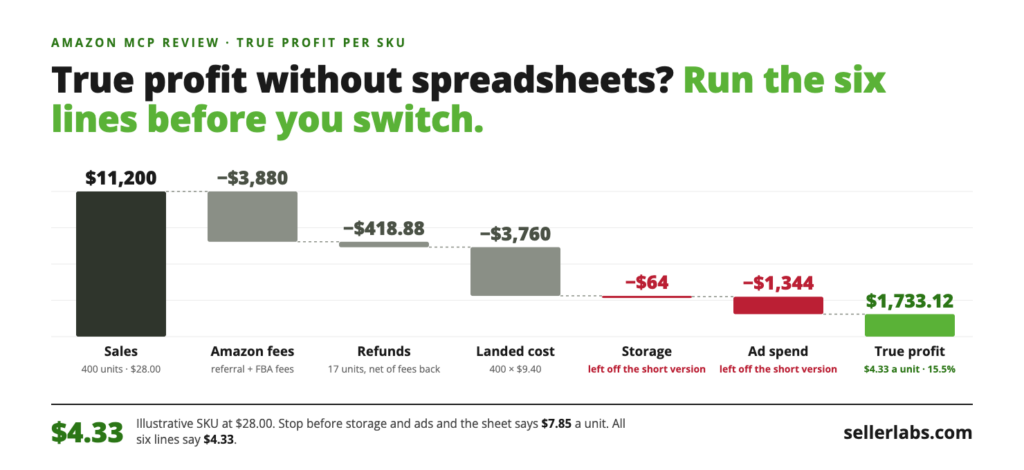
Profit Genius shows you exactly how shipping cost changes impact your per-SKU profitability. No spreadsheets required. - Audit your insurance coverage
If your shipments regularly exceed $20 in value, you’ll need to add coverage or use UPS Ground instead. - Talk to your UPS representative
Ask whether your discount tiers or rate structures changed as part of the April 2025 rebrand. - Stay updated on surcharges
UPS periodically adjusts fuel and seasonal peak fees — these can differ between Ground Saver and standard Ground.
Shipping costs are just one piece of the profitability puzzle. Profit Genius gives you a single view of all your costs, fees, and margins.
The Bottom Line
UPS didn’t make a mistake — this is a strategic repositioning of its low-cost ground service. UPS Ground Saver now fits a narrower profile: lightweight, short-distance, low-value shipments.
If your packages are heavier, travel longer distances, or carry higher values, you may now find UPS Ground more cost-effective.
Want to see which SKUs are most affected? Connect your data with Amazon MCP and ask Claude to identify your thinnest-margin products after the rate changes.
Smart shippers track, test, and adapt. Review your rate tables regularly, monitor surcharges, and compare services to keep your margins healthy. A few dollars per shipment adds up fast — and understanding these 2025 UPS changes helps you stay one step ahead.
Ready to Stay Ahead of Amazon’s Shipping Changes?
Turn complex fulfillment changes into clear, data-backed insights with Seller Labs.
Analyze SKU-level costs, monitor profit trends, and optimize your product strategies — all in one place.
For a limited time, get 30% off your first month — after your 30-day free trial.
Related Blogs
- Low Inventory Level Fees: Do You Know How Much Amazon Is Charging You?
Discover how Amazon’s new low-inventory fees can quietly erode your profit margins. - Master Amazon Inventory Like a Pro in 2025 with Seller Labs
Learn how to improve inventory management using Seller Labs’ data-driven tools. - Amazon 2025 Fee Changes: How They Affect Sellers
Understand how Amazon’s updated fee structure will influence your 2025 profit strategy. - Amazon Buyer-Seller Messaging Suspension: How to Address & Prevent It
Avoid costly account issues by staying compliant with Amazon’s communication policies. - Amazon SEO: How to Optimize Your Product Listings for Higher Rankings & Sales
Boost visibility and conversions with updated SEO strategies that work in 2025. - How to Maximize Your Amazon Ad ROI with Data-Driven Strategies
Use analytics to identify ad waste and reallocate your budget for higher ROI.